
YIGE · 易戈
Ancient Jade
Collection
Each piece in this collection is a vessel of time \u2014 carved from stone that has witnessed dynasties rise and fall, bearing motifs that encode the cosmological vision of ancient China. To hold one is to hold a conversation across millennia.
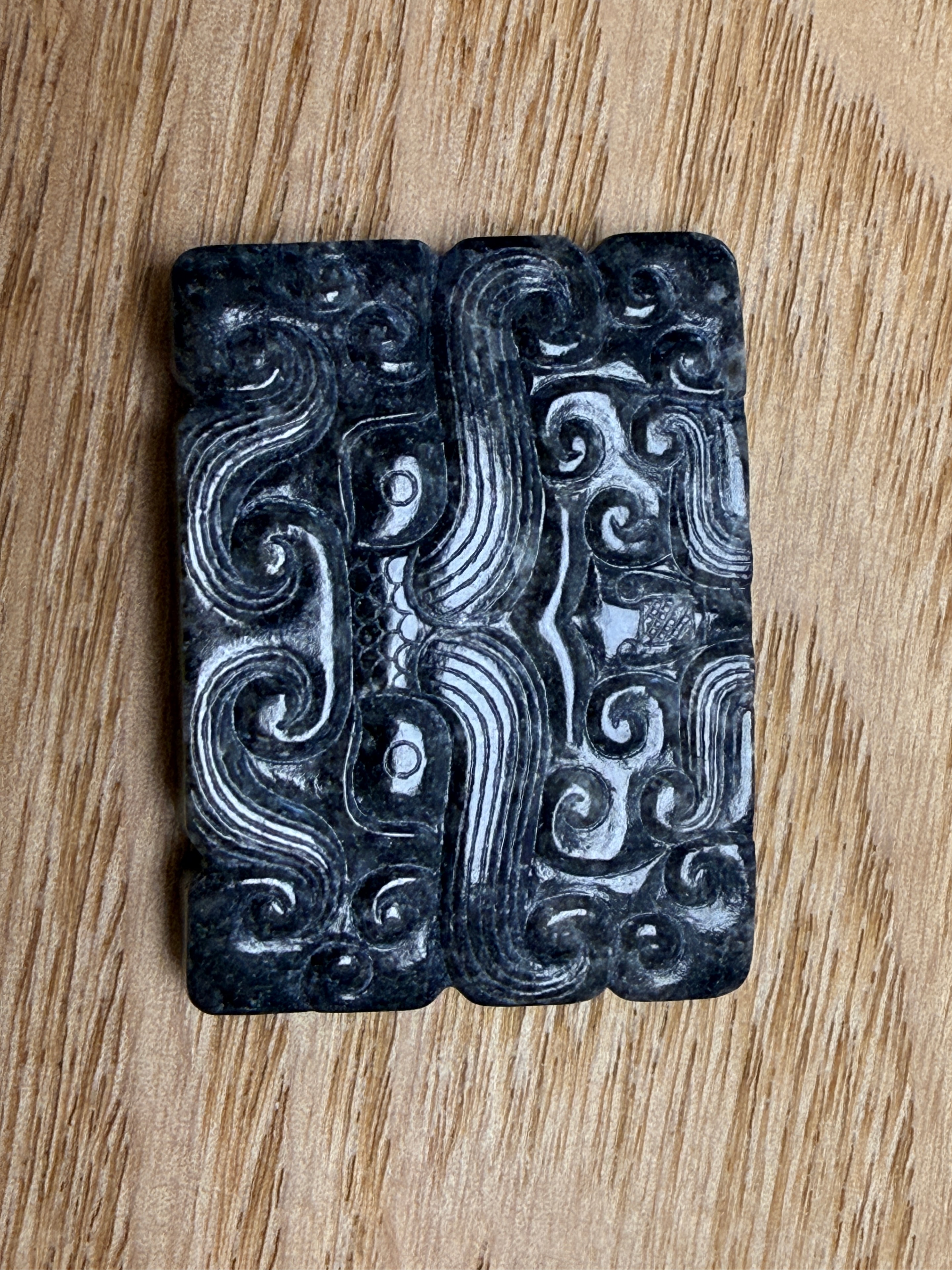
Black Jade Taotie Plaque
Carved from richly toned black jade, this plaque features the iconic Taotie motif, one of the most enduring symbols in ancient Chinese art. The stylized mask is framed by finely carved cloud scrolls and interlocking geometric patterns, creating a harmonious composition that reflects the balance between heaven, earth, and humanity.
The deep black jade possesses a smooth, lustrous surface and a refined translucency that reveal the exceptional craftsmanship of traditional Chinese lapidary artists. Every carved line demonstrates the precision, discipline, and artistic sophistication that have defined Chinese jade carving for millennia.
Cultural Significance
The Taotie motif originated during China's Bronze Age and became one of the defining decorative elements of Shang and Zhou ritual vessels. When carved into jade, it represents more than artistic excellence — it symbolizes protection, authority, spiritual awareness, and the enduring connection between humanity and the natural order.
For centuries, jade has been revered in Chinese culture as the embodiment of virtue, harmony, and moral integrity. This plaque reflects both the aesthetic refinement and the profound philosophical values that have made Chinese jade one of the world's most celebrated artistic traditions.
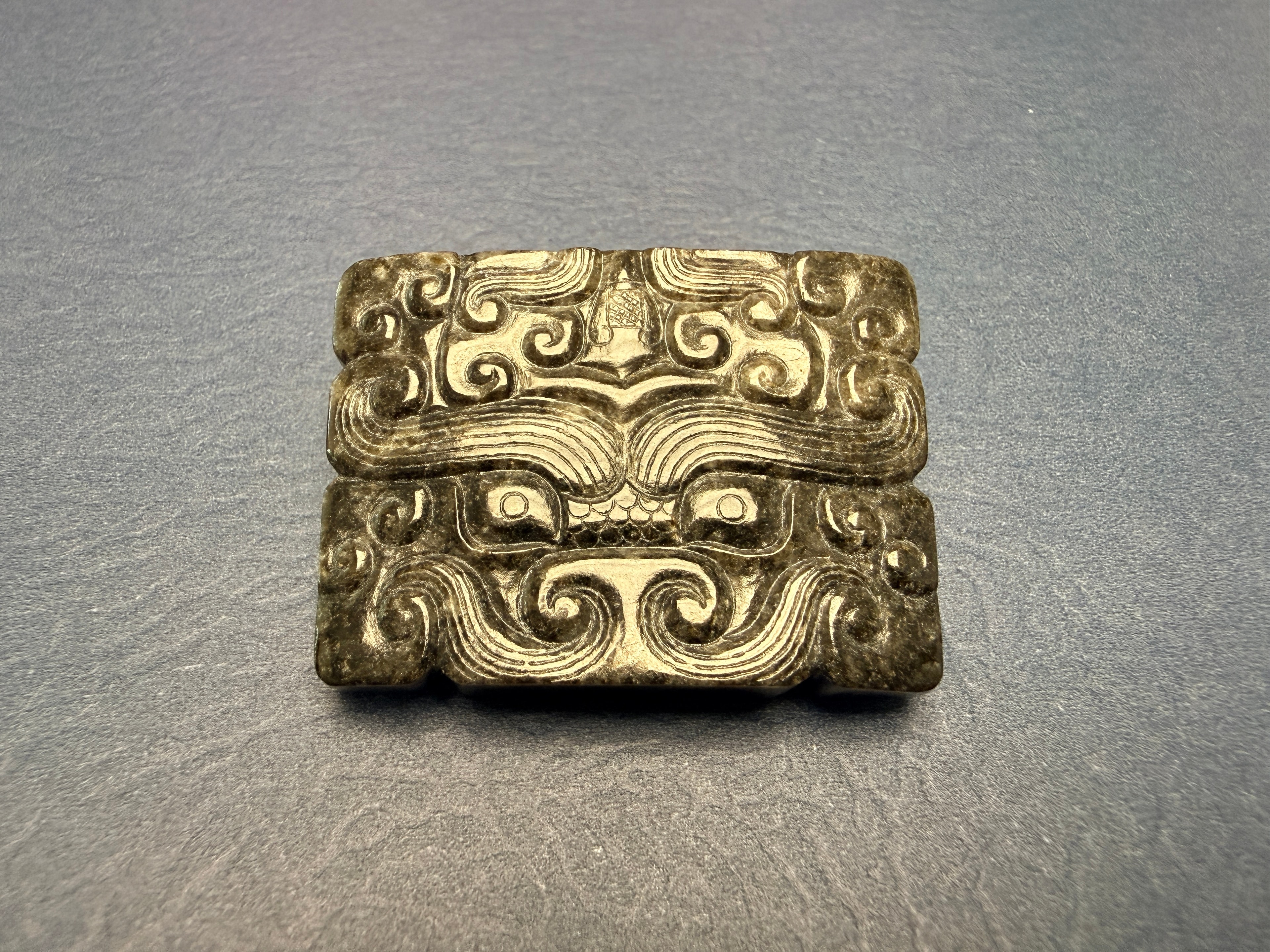
Yellow Jade Taotie Plaque
Carved from warm-toned yellow jade, this plaque features the iconic Taotie motif, one of the most enduring symbols in ancient Chinese ritual art. The symmetrical composition combines a stylized beast mask with finely carved cloud scrolls and geometric patterns, reflecting the balance, order, and artistic refinement valued in early Chinese civilization.
The jade's rich golden-yellow hue, smooth texture, and subtle natural translucency highlight the exceptional craftsmanship of ancient Chinese lapidaries. Its warm color lends the piece a quiet elegance while emphasizing the timeless beauty of carved jade.
Cultural Significance
The Taotie motif has been a defining element of Chinese ritual art since the Shang and Zhou dynasties. Carved into jade, it symbolizes protection, authority, and the enduring relationship between humanity, ritual, and the natural world.
Yellow jade has long been admired for its warmth, refinement, and noble character. Throughout Chinese history, it has been associated with virtue, prosperity, and harmony, reflecting the traditional belief that jade embodies both moral excellence and artistic perfection.
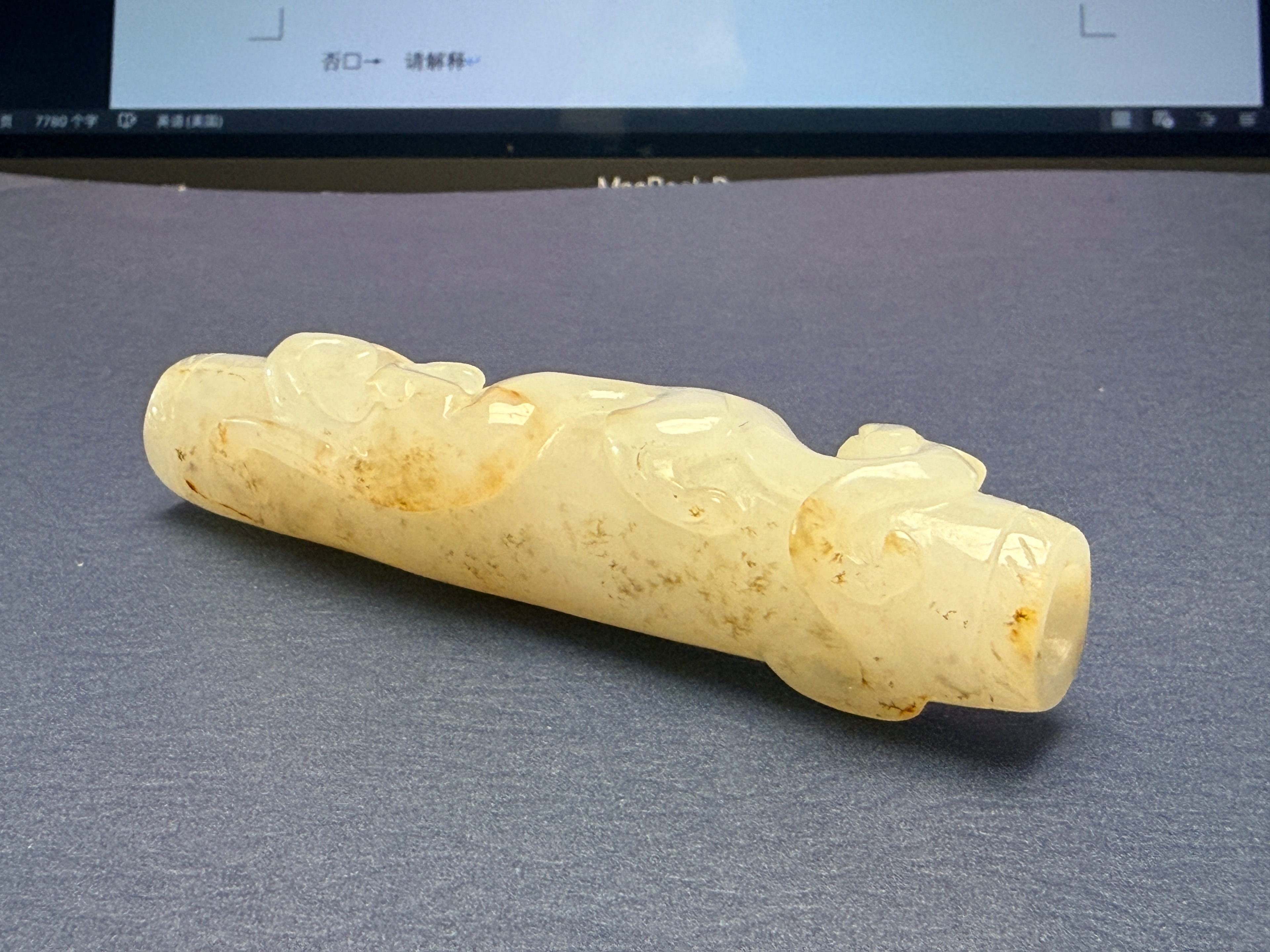
White Jade Beast Ornament
Carved from finely textured white jade with natural russet inclusions, this elongated ornament depicts a series of stylized mythical beasts in low relief. The sculptural composition flows seamlessly along the body of the piece, demonstrating the refined carving techniques and balanced proportions characteristic of ancient Chinese jade craftsmanship.
The translucent white jade, enriched by naturally occurring amber-toned inclusions, enhances the depth and individuality of the stone. Rather than concealing these natural variations, the artisan incorporated them into the work, emphasizing the harmony between craftsmanship and nature.
Cultural Significance
Mythical beasts frequently appear in ancient Chinese jade as symbols of guardianship, longevity, and spiritual protection. Their presence reflects the close relationship between ritual practice, artistic expression, and philosophical thought in early Chinese civilization.
White jade has long been regarded as the highest expression of virtue in Chinese culture. Revered for its purity, refinement, and quiet elegance, it became a symbol of moral integrity and noble character throughout China's history.
Gold has a price; jade is priceless.
— Chinese Proverb
Connect With YIGE
Inquire About the Collection
Each piece carries its own story and energy. We welcome private inquiries from those who feel a genuine resonance with these objects.